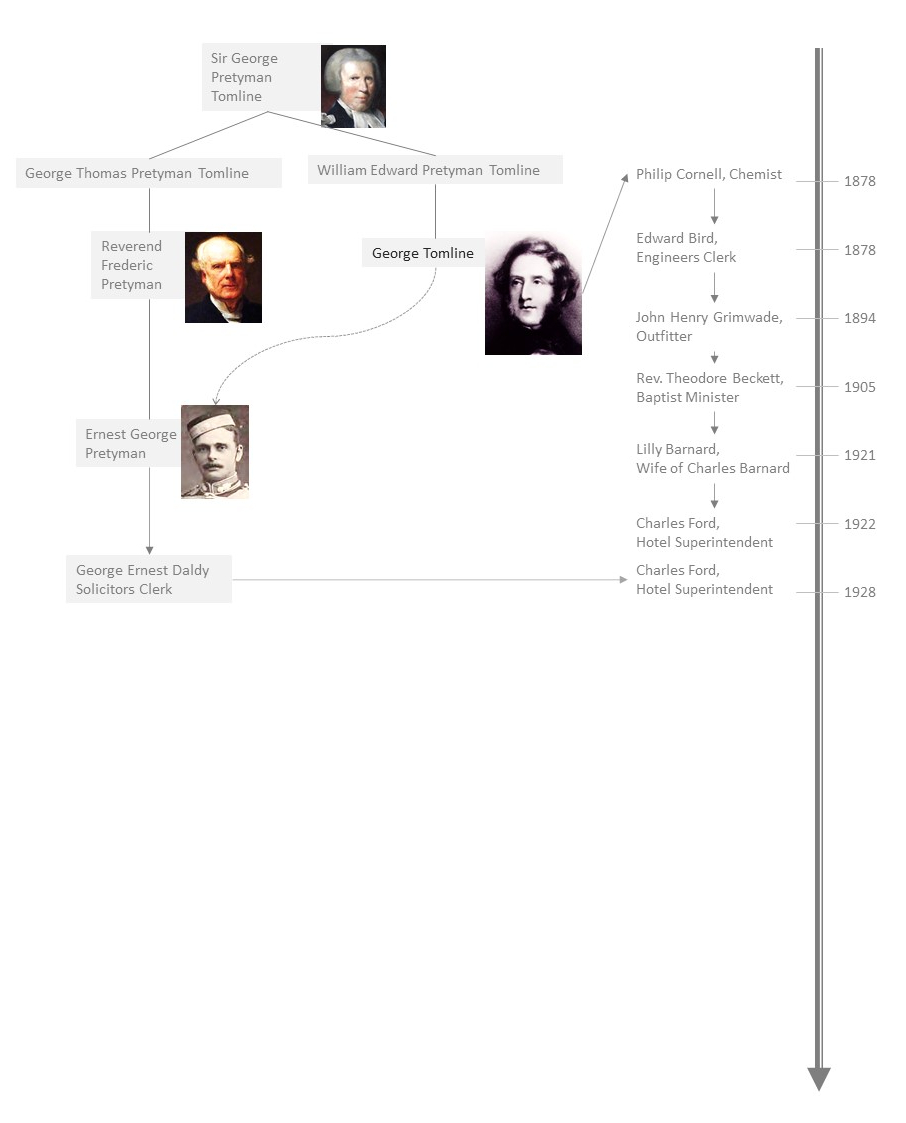
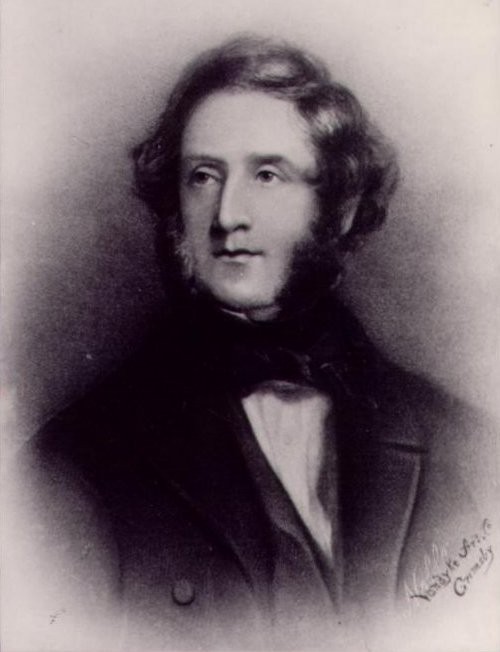
George Tomline, known by his contemporaries as Colonel Tomline, was a wealthy local landowner. Tomline spent much of his time and money acquiring land in Suffolk, especially between Ipswich and Felixstowe. He was convinced of Felixstowe’s potential to become a lucrative seaside resort, as well as a commercial town and port. Tomline’s ambition was to build a new town to the south of Felixstowe, which would serve both as a resort and a port, creating a new civic core on the southern peninsula.
In 1867, Tomline had purchased 6,000 acres from the Duke of Hamilton, which included 1,000 acres of shore and saltings (and Martello Tower P), upon which he started to build. His first priority was to overcome the poor transport links. Almost immediately after he acquired the land, Tomline built Walton Avenue, a straight leafy road that ran between Walton Ferry and the south Felixstowe development site. In 1875 he founded ‘The Felixstowe Railway and Pier Company’.
At the same time as building his new dock, Tomline was also laying out his new town around the Beach station, located where the railway crossed Walton Avenue. In a determined piece of town planning, Tomline laid down a rectangular street grid, with the Beach station as the main focus.
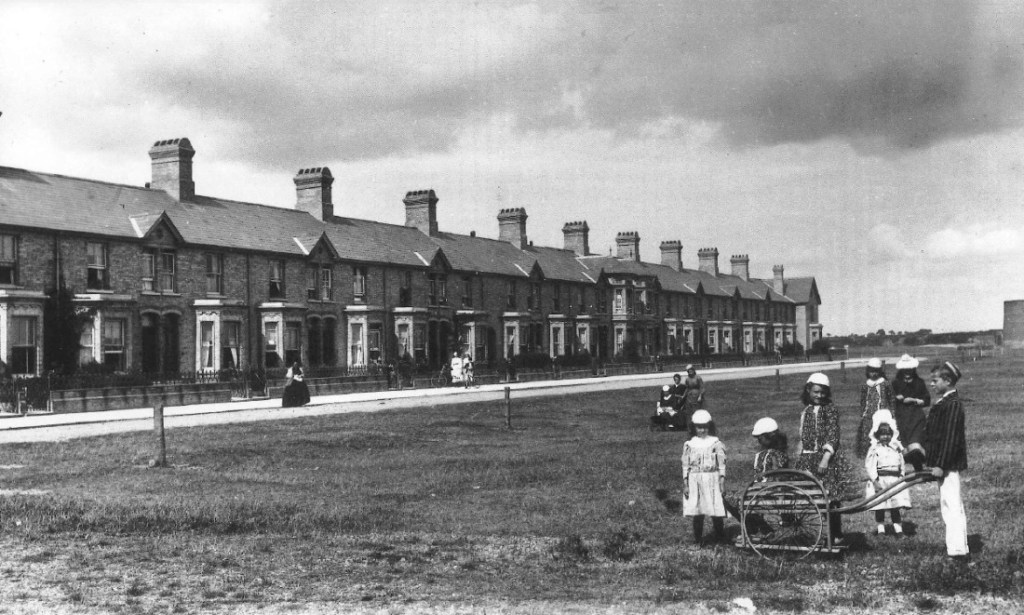
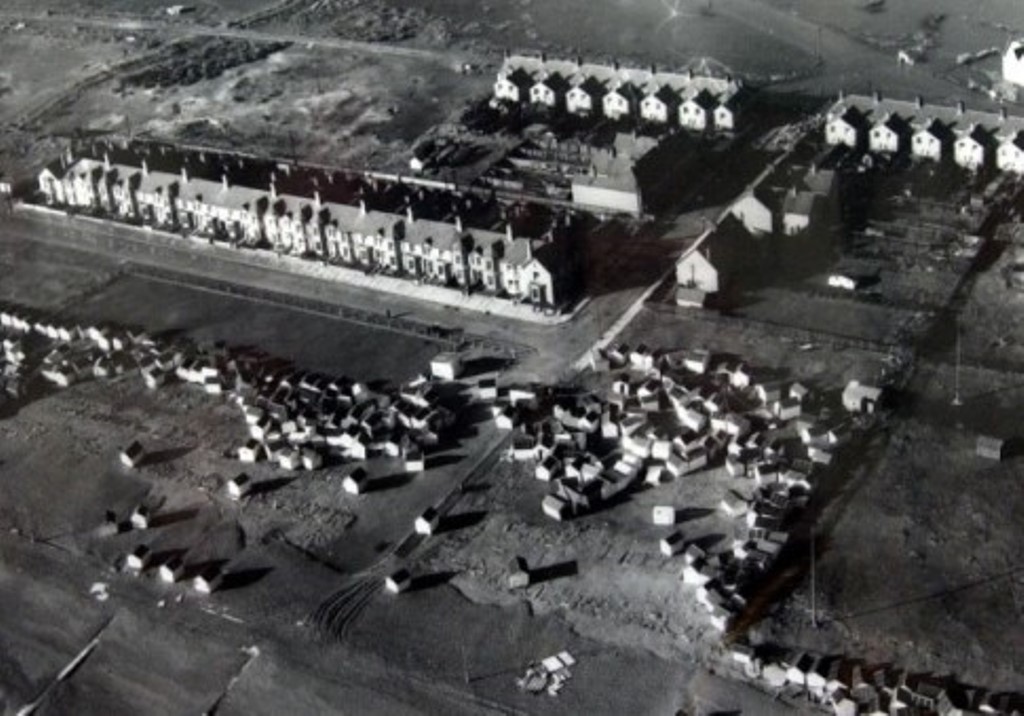
Manor Terrace was the first row (and indeed only row built by Tomline) of houses to be completed within the grid. The houses were not designed to be grand Victorian seaside houses, but modest terraced houses to provide homes for the dock labourers.

At the end of the grid, was the Manor House, an elegant threestorey building, with views out to sea and towards the Landguard peninsula. It was intended to be the grand finale to Tomline’s settlement, situated at the end of the grid and presiding over the town. Originally designed as a hotel, it shut within six years of its opening in 1877 due to a lack of guests and was converted into home for Colonel Tomline.

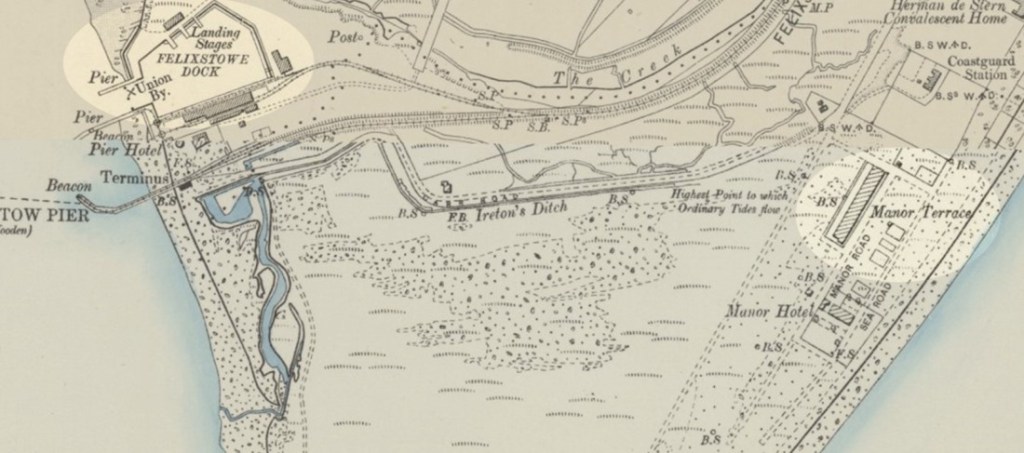
An Ordnance Survey 25 inch map, surveyed in 1879-1880 and published in 1881.
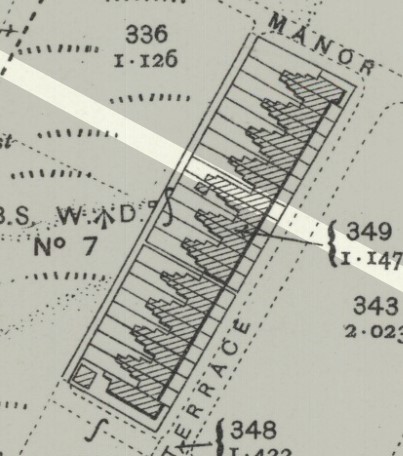
And here is a revision from 1902, published in 1903. Interesting to note that my house (highlighted) is already showing the rear extension – I had no idea it was that old!